

A fixed luxury itinerary can be the better choice when you want a familiar route and ready-made rhythm; a bespoke journey is shaped around what matters to you. Knowing how to plan a bespoke journey means looking beyond dates and hotel categories to consider why you’re travelling, your preferred pace and interests, and the experiences you hope to take home. The result is an itinerary built around your priorities, with room for quiet pauses as well as meaningful encounters.
A trip feels different when its details suit the people taking it. This guide explains what bespoke travel involves, which questions help shape a trip, and how choices about routes, accommodation, and transport influence the experience. It also clarifies how a made-to-measure itinerary differs from a package or group tour.
Key Takeaways
- Shape the itinerary around your preferred pace, interests, and the kinds of moments that matter to you.
- Use memories of past trips and clear travel goals to guide the choices that make a journey feel personal.
- Consider hotel location alongside your route and priorities, since each choice affects how you experience a destination.
- Compare bespoke travel with fixed itineraries by weighing personal flexibility against a ready-made schedule and shared group experience.
What Are Bespoke Travel Experiences?
Bespoke travel begins with the traveller, not a standard route or hotel tier. To understand how to plan a bespoke journey, a travel expert considers your interests, past trips, life stage, and daily rhythms. A couple celebrating an anniversary may want private dinners and slow mornings; a family with young children may prefer fewer hotel changes and open afternoons. These details shape the itinerary before individual experiences are selected.
Past trips offer useful clues. A memorable walk through Kyoto may point to a preference for local neighborhoods over a checklist of landmarks; a tiring, multi-stop trip may suggest choosing fewer destinations next time. Your preferred pace matters just as much. An early start may suit a wildlife adventure, while a later morning and unhurried lunch may better fit a restorative coastal stay.
- Interests: Match a food-focused trip with market visits and cooking experiences, or an art interest with time in Florence galleries.
- Travel rhythm: Decide whether you prefer full days, open afternoons, or a balance of guided activities and unscheduled time.
- Life stage: Consider mobility, children’s needs, celebration plans, and how much energy each travel day should ask of you.
Geography also shapes the experience. Every transfer takes time away from exploring, so combining distant destinations can make a short trip feel rushed. A planner may suggest a longer stay in one place or a closer second stop. The right balance depends on your interests, available time, and the connection you want to make with each destination.
When choosing a bespoke travel planner, look at how clearly they explain their process, destination knowledge, and written terms. Review relevant credentials and examples showing how recommendations reflect travellers’ preferences, rather than relying on polished imagery alone. A good planner listens closely, then presents curated options that balance your priorities with the practical shape of the trip.
Asking discovery questions about memorable experiences and trip goals
A revealing planning conversation starts with a memory, not a destination shortlist. A travel expert may ask you to describe your most unforgettable trip moment and why it stayed with you. Was it the quiet of a dawn walk, a meal shared with local hosts, or the freedom to change plans? Your answer helps distinguish the experience itself from the feeling you want to find again.
Other questions clarify the journey’s purpose and character. What do you want this trip to mean to you? Would you rather see famous landmarks first or discover a place through its neighborhoods and daily rituals? Naming the hoped-for feeling, such as renewal, shared discovery, or adventure, helps guide the destination and itinerary. Specific answers are more useful than simply asking for luxury.
- For a food-led stay: A guide might arrange a market visit in the morning, followed by a cooking session or a meal with a local host.
- For wine and landscape: In Tuscany, visits to vineyards can be balanced with time for a long lunch and an unhurried drive through the countryside.
- For cultural context: A privately guided walk can bring a historic district’s architecture and customs into focus.
These experiences depend on thoughtful logistics. A private guide’s meeting point, the transfer between a vineyard and a hotel, and time to rest all shape how the day feels. An exclusive experience can mean greater privacy or a more personal setting; it does not guarantee access to every closed site. A planner matches options to your interests and explains how they fit into the schedule.
Share dietary preferences, wine interests, mobility needs, and how much structure suits you. Those details help an expert shape guided experiences without crowding out spontaneous discovery. If privately guided moments belong at the heart of your plans, explore privately guided experiences as one way to bring your interests closer to the destination.
What Goes Into the Cost of a Bespoke Trip?
A well-planned journey brings its route, reservations, and practical details together. Hotel location, travel time, and your preferred experiences all influence the rhythm of each day.
Planning and Trip Coordination
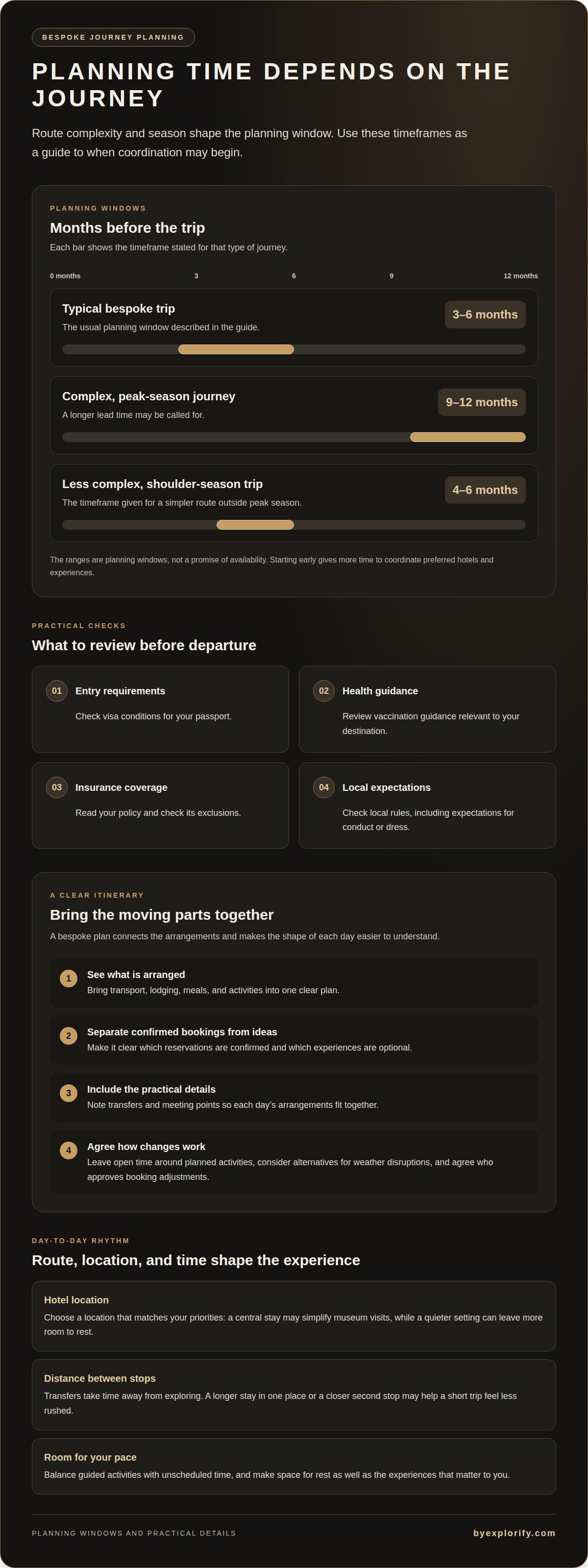
Planning and coordination turn your travel brief into a coherent route and bring its arrangements together. Hotel location affects access to restaurants, activities, and transport, so it should match what you want to do. A central stay may simplify museum visits, while a quieter setting can leave more room to rest. Feedback after the trip about its pace, lodging, and arrangements can help shape future plans.
Itinerary Details and Flexibility
A bespoke itinerary brings transport, lodging, meals, and activities into one clear plan. It should distinguish confirmed reservations from optional ideas and include practical details such as transfers and meeting points. That clarity helps you see how each day fits together. Leave open time around planned activities, and consider alternatives if weather disrupts outdoor plans. Before departure, agree how changes will be handled and who approves booking adjustments.
Destination Checks and Planning Timeline
Destination checks cover entry requirements, health guidance, insurance coverage, and local rules. Review visa conditions for your passport, vaccination guidance relevant to your destination, policy exclusions, and local expectations for conduct or dress. Planning time depends on route complexity and season. A bespoke trip typically takes 3 to 6 months to plan; complex peak-season journeys may call for 9 to 12 months, while less complex shoulder-season trips often suit a 4 to 6-month timeframe. Starting early gives more time to coordinate preferred hotels and experiences.
Comparing bespoke trips with packaged luxury and group trips
The clearest difference is who sets the rhythm. A package follows a predesigned itinerary; a bespoke trip is shaped around your preferences, from the first destination to the pace of each day. Luxury describes the standard of travel, not necessarily how personalized it is. A polished package can offer consistency, while a custom journey can make room for a particular moment that matters to you.
A fixed luxury tour may suit you if you’re making plans spontaneously or have little lead time. A pre-arranged stay in an iconic destination can also make sense when familiarity and consistency matter more than discovery. You trade some flexibility for a prepared structure. That can be welcome when you want the main arrangements set without shaping every detail with an advisor.
Group travel brings a different consideration: the schedule has to work for everyone. A package tour may place you among more than 30 strangers, with shared departure times and common stops. That structure can suit travellers who enjoy company and a set programme. It may feel restrictive if you want private time, a slower lunch, or an unscheduled afternoon. Bespoke travel instead centres the itinerary on you and your companions, so daily choices reflect your priorities.
Use three questions to compare the formats: Do you want to choose the route or follow one already designed? Is a shared schedule part of the pleasure, or would you rather set your own pace? Does consistency matter more than experiencing a destination in a personal way? Your answers can show whether a package’s ready-made structure or a bespoke plan is more likely to deliver the experience you value.
If you want a journey shaped around your preferences rather than a fixed schedule, start planning a bespoke itinerary.
Explorify: Bespoke private journeys
Explorify creates bespoke private journeys from a blank page, shaping each route around your priorities instead of a fixed schedule. This approach suits you when a standard itinerary doesn’t reflect your pace, interests, or reason for travelling. For a wildlife-focused trip, a private safari can form the journey’s centre; flight arrangements can also be included in the wider plan.
Explorify’s recommendations draw on firsthand visits: the team personally visits every lodge, camp, and guide it recommends. This knowledge helps connect practical details with your preferences, from where you stay to how you experience each destination. Bring an early idea, a special occasion, or simply the places you want to explore. Contact Explorify to discuss the journey you have in mind.
Give Your Travel Idea Its First Shape
Understanding how to plan a bespoke journey starts with deciding what you want the experience to mean, not filling every day on a map. One clear intention, such as time together, a deeper encounter with a place, or room to pause, can guide the decisions that follow. Shape the route around that intention, leaving space for the unexpected details that make a trip feel personal.
You don’t need a finished itinerary to begin. A destination that draws you, a moment you hope to share, or a few preferences are enough to start a useful conversation. Explorify’s team can turn those first thoughts into a considered travel plan, with choices shaped around your priorities.
Contact Explorify to plan your journey, and take the first step toward travels that feel distinctly your own.
Frequently Asked Questions
What is a bespoke journey and how is it different from a package tour?
A bespoke journey is designed around your priorities, while a package tour follows a prearranged itinerary. The difference is how much you can choose: you shape the route, pace, and experiences rather than joining a schedule created for a broad audience. For example, you might build a stay around a family celebration, with private time and activities chosen for the people travelling.
What steps should I follow to plan a bespoke trip?
Start with your purpose, dates, travel companions, and essential preferences, then develop a route and refine its details. Once the itinerary reflects your priorities, review the proposed arrangements and written terms before approving reservations. Keep confirmed bookings and relevant contacts together. This gives you a clear reference if plans change or you need to revisit a detail.
How do I choose destinations and experiences for a personalized itinerary?
Choose places for the experiences they offer, rather than collecting destinations for their names alone. If you value architecture and food, a city stay with time for neighborhood walks may suit you better than frequent transfers. Consider the season, distances between stops, and what you hope to do each day. A shorter route can leave more room for meaningful encounters.
What information should I give a travel planner when requesting a custom trip?
Share your preferred dates, departure point, destinations under consideration, number of travellers, and the occasion or purpose. Add practical details such as dietary needs, mobility considerations, preferred room arrangements, and activities you want to avoid. Mention one past trip you loved and one that didn’t suit you, explaining what made each experience feel right or wrong.
What should I consider when shaping a bespoke journey?
Consider the experience you want and the arrangements that will support it. Your destinations, travel dates, accommodation preferences, transport, and activities all shape the itinerary. Decide which elements matter most, such as time in a particular place or a specific kind of experience. Sharing those priorities with your travel planner helps guide decisions and keeps the proposed journey aligned with your intentions.
What are common risks or hidden costs when planning a bespoke trip?
Unexpected expenses often stem from unclear inclusions or changes made after bookings. Before approving an itinerary, distinguish confirmed reservations from optional suggestions and note which meals, transfers, and activities are included. Read the cancellation and change terms, and agree who approves extra charges. Keep confirmation details together so you can track what has been arranged and where additional expenses may arise.
