

You don’t need to know exactly where you want to go before planning tailor-made private journeys. Your interests, travel dates, preferred pace and travelling companions can help point you toward the right destination, whether you’re drawn to family time, cultural encounters, a safari or a quieter kind of luxury.
It’s natural to want both freedom and reassurance: time for an unhurried lunch or an unexpected detour, with practical details arranged around you. Guides, transport, meals and lodging can all be selected to suit the way you want to travel.
This article explains how the planning process works, who custom journeys can suit and how each element fits together, from a family’s shared priorities to the rhythm of a private safari or a trip focused on place and culture. You’ll see what to decide first and how to make a journey feel personal without scheduling every moment.
Key Takeaways
- Begin with two or three experiences you care about most; they can help give an undecided destination search a clear direction.
- Consider who is travelling and what will make each day comfortable, including pace, mobility and local expertise.
- Choose where private guides and transport add real value, while leaving room for meals or moments that unfold naturally.
- See how family, luxury, safari and cultural journeys call for different planning choices, and what those choices can mean for your itinerary.
Can you help if I don't know where I want to go on a Tailor-Made trip?
Yes. Start with your interests, preferred pace, travel dates and budget, then use those priorities to guide destination ideas. A particular experience, such as wildlife viewing or community-led craft, can give the itinerary its first shape.
Itinerary Request and Refinement
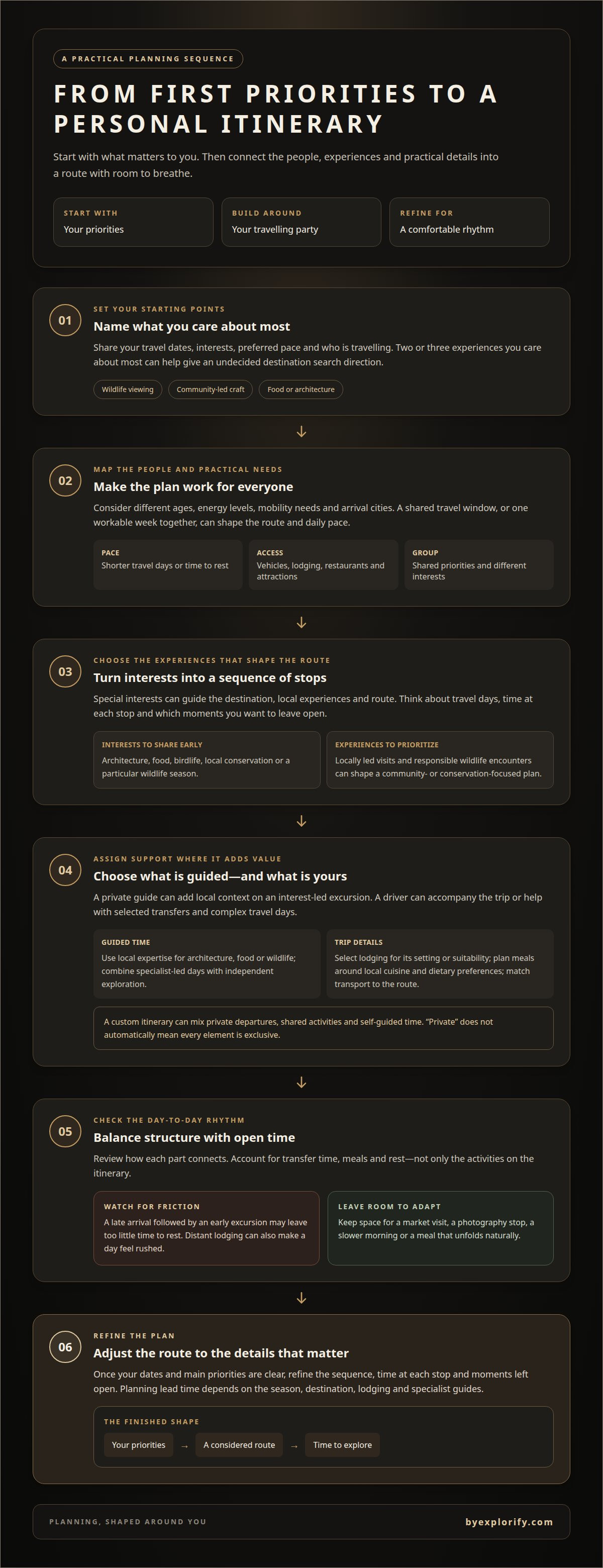
Begin by describing who is travelling, what matters most and how you like to spend a day. A wildlife enthusiast, for example, may want early outings, while another traveller prefers village visits and long lunches. Those priorities can guide the route, accommodation, guiding and transfers.
Review the sequence as well as the destinations: consider travel days, time at each stop and moments left open. Community- and conservation-focused plans can prioritize locally led experiences and responsible wildlife encounters. Read the booking terms for deposit, cancellation and refund rules, including when deposits are due and which payments may be refunded.
Flexible Plans and Special Interests
A flexible itinerary can leave room for a market visit, a photography stop or a slower morning instead of fixing every hour. Share special interests early, such as architecture, food, birdlife or local conservation, so the route can reflect them. Private arrangements can also account for different energy levels or mobility needs within your travelling party.
In the United States, bespoke travel advisors and private journey designers create custom itineraries. The right fit depends on the destinations and expertise you need. Some plans combine independent exploration with specialist-led days, offering structure where it adds value and freedom elsewhere.
Custom Design and Booking Decisions
Custom design is especially useful when several priorities need to work together, such as a family’s varied interests, a specific wildlife season or remote stops with transfers to coordinate. It can also bring community-led visits and conservation experiences together without relying on a standard route.
Start planning once your dates and main priorities are clear. Lead time depends on the season, destination, lodging and specialist guides; sought-after stays or complex connections can shape the schedule. First identify the experiences you most want, then refine the route around them.
Who is tailor-made travel for?
Custom travel suits you when a fixed route can’t account for the people, priorities or practical needs in your party. A family with relatives arriving from different cities, for example, may have only one workable week together. A considered itinerary can align flights, accommodation and daily pace around that shared window.
Accessibility calls for planning across the whole journey, not just the hotel room. ISO 21902 frames accessible tourism across the tourism value chain. Consider vehicle access, platforms, landings, restaurants and attractions, alongside accommodation. Temporary injuries, hearing or visual needs, and fatigue can also shape which transfers and activities work well.
Different travel styles benefit in different ways. Families may need shorter travel days and activities suited to varied ages. A luxury itinerary can prioritize privacy, thoughtful pacing and carefully chosen places to stay. Cultural travel may focus on local food or heritage, while wilderness travel leaves more time for landscapes and wildlife.
Local experts add context that a map can’t provide. Their destination knowledge can help shape realistic travel days, select meaningful encounters and spot potential friction between stops. Review how each element connects: a late arrival followed by an early excursion, for instance, may leave too little time to rest.
Unlike a fixed package, a custom itinerary can be shaped around your interests and adjusted to suit your priorities; private travel alone does not necessarily mean a flexible route. For complex distances or arrivals from different cities, flight arrangements can form part of the journey’s design. Choose a tailored approach when the combination of timing, access, interests and local experience matters more than following a standard sequence.
Private guides, transport, meals, and lodging
These choices shape the character and pace of each day. A private guide can add local context, while independent time leaves room for unexpected discoveries.
Private Guides and Drivers
A private guide can lead excursions focused on a particular interest, from architecture and food to wildlife. A driver can accompany you throughout the trip or support selected transfers and complex travel days. Decide where local insight matters most, then leave other hours open for your own discoveries.
Private departures keep arrangements focused on your travelling party, while self-guided days offer more independence. Both can fit into one itinerary. On an adventure in a nature reserve, for example, a guide may help interpret wildlife, while the afternoon remains unstructured.
Meals, Lodging, and Transport
Transport might include a vehicle and driver for road journeys or a boat charter where water is part of the route. Choose lodging for its setting, character or suitability for your group. Meals can reflect local cuisine and dietary preferences, with some tables reserved and other evenings left flexible.
Consider how each element connects: a late arrival, distant accommodation and an early excursion can make a day feel rushed. A well-paced plan accounts for transfer time as well as meals and rest. Shared activities or scheduled transport may still be part of a custom itinerary, so “private” doesn’t automatically mean every element is exclusive.
Accessibility requires attention throughout the journey. Useful descriptions go beyond a general label and explain practical details such as dimensions, thresholds, rails, shower seats, gradients and transfer methods. A guide’s approach matters too: clear communication, an appropriate walking pace and rest opportunities can affect whether an excursion feels manageable.
Choose a private guide for specialist knowledge, local context or support through a complex day. In familiar areas or on a gentle coastal afternoon, independent exploration may suit you better. A strong arrangement combines guided moments with room to pause, notice the light and follow your curiosity.
Tailor-made family, luxury, safari and cultural trips
A holiday feels more meaningful when its highlights reflect the people travelling. A family may value shared time over a packed schedule; another party may want nature, architecture or a particular cultural connection. Shape the route around those priorities instead of treating one itinerary as right for every travel style.
For families, plan around different ages, energy levels and interests. A day might pair a gentle nature outing with time to rest, then bring everyone together over a meal. Multigenerational travel needs extra care: private guiding remains subject to park rules, lodge policies, children’s age restrictions and wildlife behaviour on safari. These practical limits shape which experiences suit the whole party.
Luxury is about fit, not simply formality. You might value secluded accommodation, unhurried mornings or a private guide who can give architecture and local history proper attention. Build the itinerary around what matters to you, whether that means quiet, close attention or a few carefully chosen highlights instead of a full day of scheduled activities.
A safari journey follows the rhythm of wildlife, landscapes and time outdoors. A custom plan can balance guided viewing with rest and account for how a lodge’s location shapes each day. Wildlife behaviour is unpredictable, so a thoughtful design lets the experience unfold without promising particular sightings.
Cultural travel can center on craft, food, history or contemporary life. Instead of moving quickly between landmarks, you might spend longer in one place and get to know its local context. For a trip combining cultural visits with nature, plan the sequence so changing landscapes feel like part of the story, not just a transfer between stops.
The useful first step is to name what you want to feel and remember. From there, shape the days around your party’s priorities and the realities of each destination. Plan a journey around your travel style when you’re ready to turn those priorities into a considered route.
Explorify: Bespoke private journeys
Explorify designs bespoke private journeys from a blank page, shaped around your interests, pace and preferred way to travel. The team personally visits every lodge, camp and guide it recommends, bringing firsthand knowledge to each itinerary.
Turn to Explorify when you have a destination in mind but need help bringing the details together, or when your priorities matter more than following a set route. Private safari experiences can be designed around the landscapes and wildlife you hope to encounter, with flight arrangements woven into the wider journey.
Share the places, experiences and rhythms that appeal to you. Explorify can use that starting point to shape a journey around your travel style. If you’re ready to explore the possibilities, contact the team to begin planning your trip.
Give your next journey its first shape
Begin with a feeling, not a finished itinerary. Perhaps you imagine quiet mornings, a deeper connection with a place or time outdoors without a packed schedule. Those instincts can guide tailor-made private journeys, giving each decision a purpose while leaving room for discovery.
You don’t need every detail settled before planning begins. Explorify’s team brings firsthand knowledge of the lodges, camps and guides it recommends, helping turn early preferences into a coherent, personal journey.
Let the first step be simple: share the idea you keep returning to, even if it’s only a place, a landscape or a particular interest. Share your journey idea with Explorify, and give it room to take shape. Your next journey can begin with one clear thought.
Frequently Asked Questions
Do I need to have everything planned before I enquire about Tailor-Made?
No. A destination, preferred travel dates or even a single interest can be enough to begin. You might mention a wish to see wildlife, explore historic streets or spend time by the sea. Sharing who is travelling and what you hope the trip will feel like gives the planning conversation a useful starting point, even if the route is still open.
How long does it take to get a pricing proposal?
Explorify responds to enquiries within 24 hours, but that is a response time, not a promise that a full proposal will arrive then. Proposal timing depends on the details to bring together, including destination, dates, accommodation and the arrangements requested. A trip involving several locations or specialist experiences may need a different planning process from a straightforward stay in one place.
Looking for Inspiration?
Start with a scene you’d like to experience: dawn over a savannah, a quiet meal after exploring old streets or a day among coastal villages. Then consider what would make that moment meaningful, such as wildlife, local food or architecture. These preferences can point toward a destination and give your planning conversation a more personal start than a list of landmarks.
What are tailor-made private journeys?
They are individually designed trips shaped around a traveller’s interests, dates and preferred pace, rather than a fixed itinerary sold to everyone. Depending on the journey, the design may combine private experiences with independent time. For example, you could arrange guided wildlife viewing in one location, then leave another day open for rest or unplanned discoveries.
What is typically included in a tailor-made private journey package?
There isn’t one standard combination. Depending on the itinerary, arrangements may include accommodation, flights, reservations and tickets, alongside private safari experiences where relevant. The written proposal should clearly describe what has been arranged and how each day is structured. Read the inclusions and cancellation terms together to understand the practical arrangements before booking.
How do I plan and book a custom private journey?
Begin by sharing your travel dates, party details and the experiences you hope to include. Explorify can develop an itinerary and arrange relevant travel components around those details. Review the proposed route, connections and written inclusions, then refine the plan before booking. Keep practical priorities in view, such as arrival times and time between activities, so the final itinerary reflects how you want to travel.